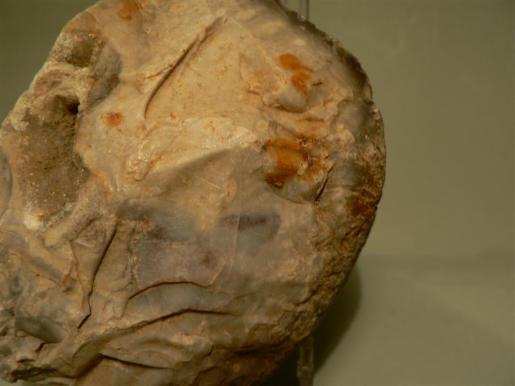
impressionen..........merkmale....under construction since 11.1.2012-17.1.2012/ 24.8.2012
KÜRZEL-SCHRIFTZEICHEN/ A search for pattern in stone
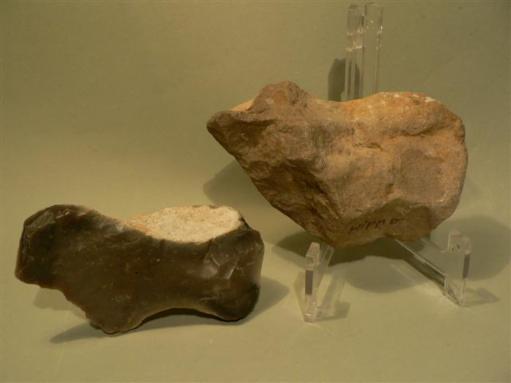
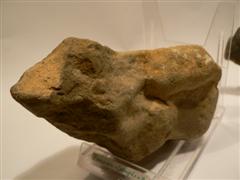
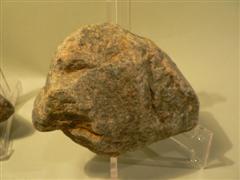
Tierart: Hippo / Nilpferd. Im Gesamteindruck der Objekte mit Andeutung von Vierfüssigkeit in Abstraktion hat diese Sklulptur ein "breites Maul und das ist geöffnet, siehe auch Foto im Kleinformat.
Compared with the overall impression of abstraction in demonstrating an animal with four legs, has the hippo a large wide mouth held open, compare to small size photos left and right.
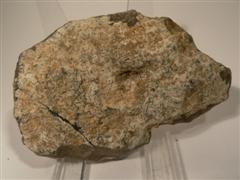
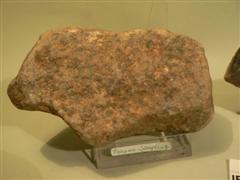
Tierimpressionen links/left "coated flint and right: granit Vollfiguren
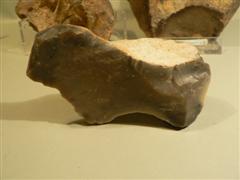
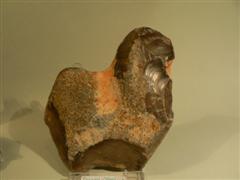
Beides Feuerstein-Figuren mit Andeutung von "Beinen" durch einen gezielten Abschlag./ All figures show the same pattern in working techniques applied. Indication of "legs".
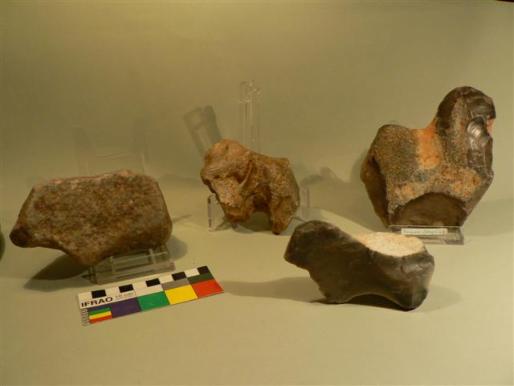
Ein Gruppenbild, zeigt im Zentrum eine Skulptur, mit extra Hinweisen auf Arme und Beine, und hat damit mehr eindeutige Hinweise auf eine gewollte Affendarstellung.
A group photo of the presented examples; exception is the centre piece in the last row, where arms and legs are wanted, in an "ape/Monkey" presentation.
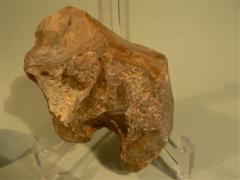
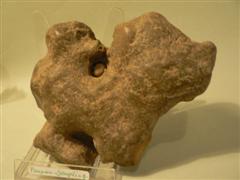
KÜRZEL-ZEICHEN KOPFTEILE / HEAD IMPRESSIONS

Tierkopfteile sind nicht immer einwandfrei zu interpretieren, dennoch erkannt sind Esel, Löwe, Pferdekopf und Bärenköpfe.
Not always easy to interpretate are the category of animal heads, here shown of bear, horse and lion.
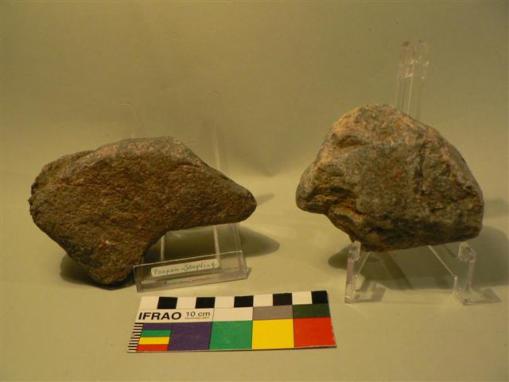
2 Kopfteile in Felsgestein. Beide haben Augenandeutungen und andere Eingriffsspuren.
2 types of animal heads both in rock-material fashioned. Both have traces to present eyes and other traces of workman ship.

IKONISCHE INFORMATION VON GESICHTERN AUF STEINEN
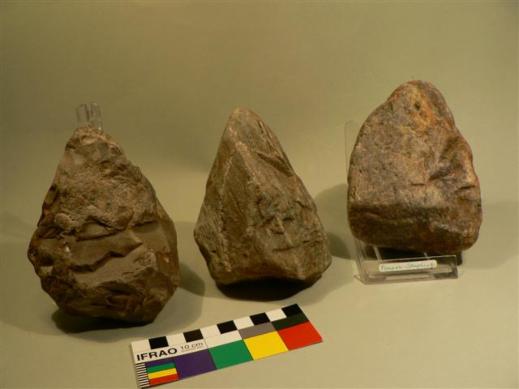
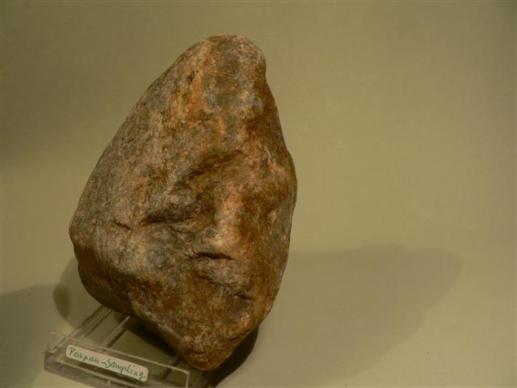
Wiederholungen auf unterschiedlichen Gesteinen..rechtes Objekt ist nochmals unten auf einem extra Foto mit leichter Drehung herausgestellt.
Series of facial impressions found in different materials from the site of Gr.-Pampau.Photo below is the same object as to be seen on right side, turned slightly.
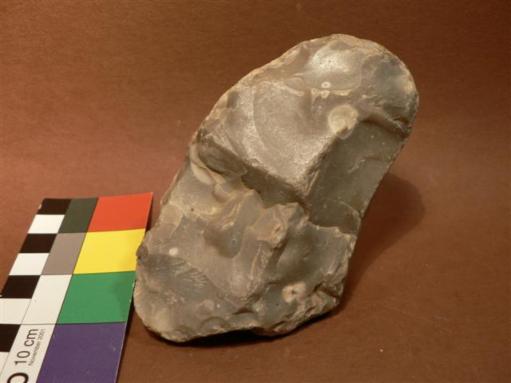
Frontalgesicht auf Feuerstein zeigt Augen, Nase und Mund.
Flint face showing eyes, nose and slightly opened mouth.
Schattengesicht/Shadow face
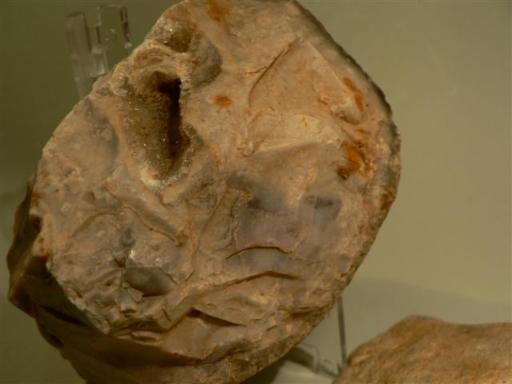
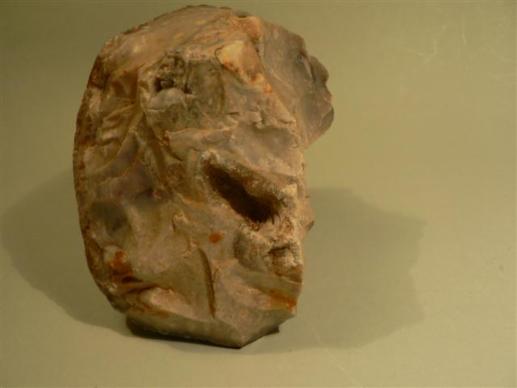
Dieses Schattengesicht trägt eine spitze Mütze, die auf dem Stein wie eingeschnitten erscheint. Stellt man das Objekt auf den Kopf, erscheinen 2 weitere Impressionen von Profilgesichtern, eines hat eine natürliche Druse mit Kristallen als Auge und einen breiten Mund, das andere Gesicht blickt nach rechts in die Ferne. Foto unten:
A shadow face wearing a pointed hat, carved into the stone, and very similar to the appearance of the foregoing objects. When turning the stone, two more facial impressions in profil show, one using the large hole with cristalls als large eye and a wide mouth indicated. Another face in profile looks to the far right.
ROBERT GARCET AUS MAASTRICHT/ Belgien hat in seinem Buch Eben-Ezer, ebenfalls eine ähnlich IMPRESSION wie dieses "Schattengesicht" vorgestellt und damit auch aus entfernten Gebieten, das Motiv belegt.
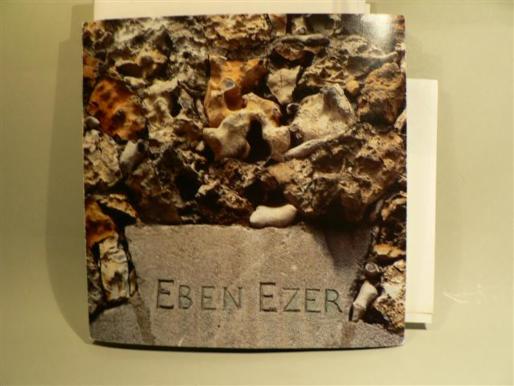
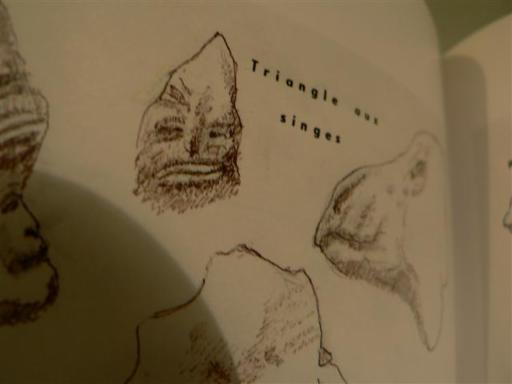
Kopie von Seite 76 (mit freundlicher Genehmigung).
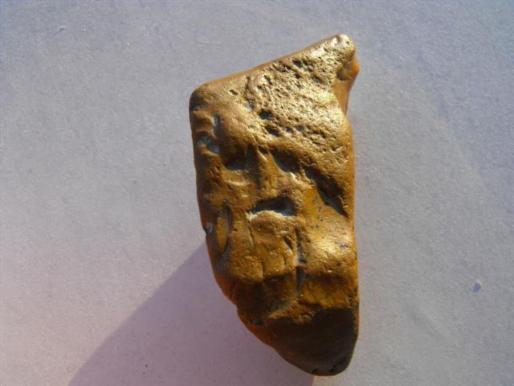
Ein mikrolithisches Fundstück, hat gleiche Gesichtszüge und ist von Bob Doyle aus Richmond, Maine USA aufgegriffen. Seine spitze Kappe sitzt hier schräg auf dem Kopf, doch ansonsten ähnelt er den anderen Fundstücken sehr.
A microlithic object with very similar facial impressions found by BOB Doyle from Richmond Maine, USA. The head dress seems here in a different position.
SICHTBAR-MACHEN / TO EMPHAZISE
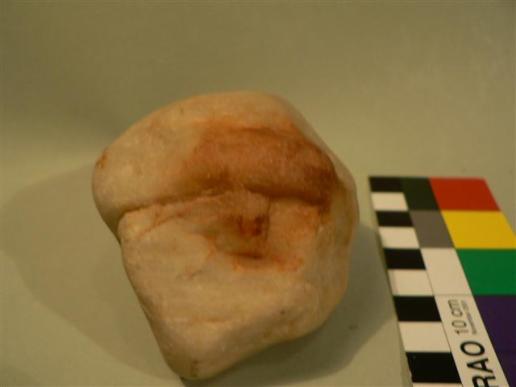
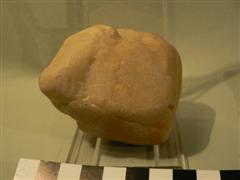
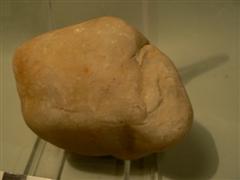
Auf einem handgerechten Quarzitgestein, der die Grundform eines Flusspferdes hat, erscheint neben anderen Formen in stilisierter Weise auch ein menschliches Gesicht mit Nase und kleinem Mund. Das Gesicht ist betont, durch eine Farbgebung, die sich rundum nicht wiederholt. Eine weitere figürliche Form jedoch erscheint bei Drehung und repräsentiert eine sitzende Tiergestalt. Auch diese Form hat eine Wiederholung in Flintgestein, vergl. nachstehendes Flintobjekt..Eine Themenwiederholung.
Color marking on this hand size stone, in a quarzitic form of a hippopotamus but only the small face is accentuated. Turning the smoothly rounded stone, another detail in form of a sitting animal appears very much similar to another shape in flint, representing the same motif, see picture below.
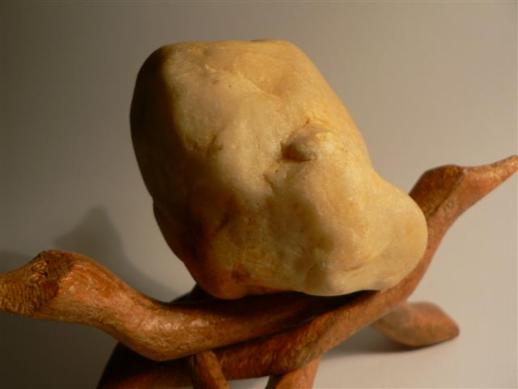
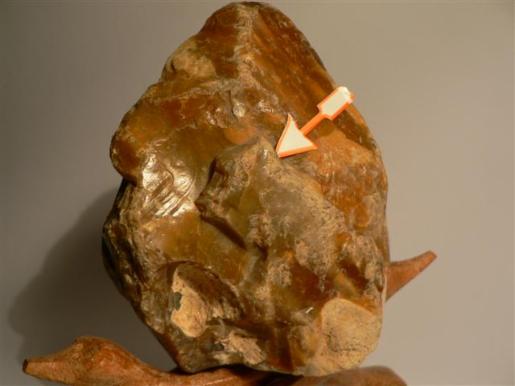
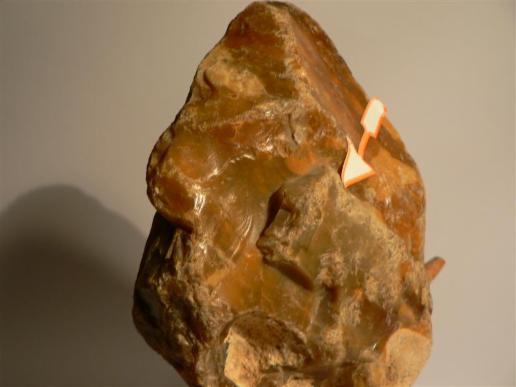
Identische Motivwiederholung an unterschiedlichen Gesteinen, ist ein starkes Argument for ein gewolltes Thema, schon damals am Stein festgelegt. Interessante Aspekte werden sichtbar, die ansonsten dem Forscher verlorengehen, würde man nur die gängigen Schlagspuren akzeptieren.
Identical here the same motif given on two different types of stone material, indicating a wanted theme manifested long time ago. A strong argument is the similarity of sitting position of this animal, offering the research more than the required "human hand" traces.
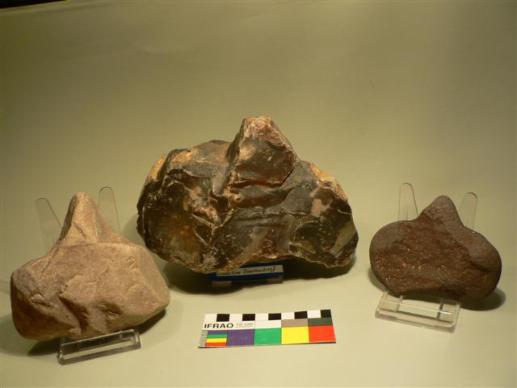
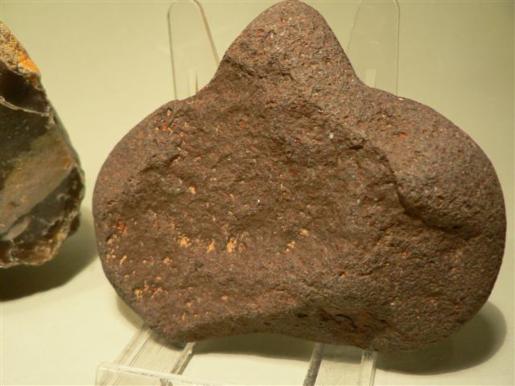
Material im Formenvergleich: links quarzitischer Sandstein, mittig Feuerstein, ca. 18cm und rechts ein Fundstück von der Insel LANZAROTE, Spanien aus Lavagestein mit identischer Formgebung. Das Lanzarote Stück ist ein Oberflächen Strandsandfund, und macht einen sehr verrundeten Eindruck. Siehe dazu auch die nachstehende Vergrößerung.
Comparing 3 different types of stone material with itentical shape. The item left is shaped in quartzite sandstone, the larger one (ca.18 cm) is flint stone and the item to the right is a surface find sampled at a Lanzarote beach area. It`s a very rolled and abraded find but carries never the less a "notch" at the centre, very similar to the objects found here amongst the gravels of Gr.- Pampau, North-Germany. Compare now the Lanzarote find with the larger photo below.
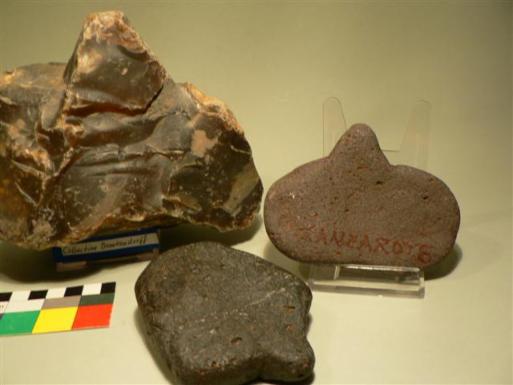
Ein weiteres Strandfundstück von Lanzarote bestätigt die artifizielle Formgebung wie das im Vordergrund liegende flache Stück von ca. 10,5 cm Größe welches ebenfalls eine gewollte, hier " zugespitzte" Form ausweist.
A second find sampled at the surface of the beach area on the Island of Lanzarote, verifies the artificial character of both "notches" when measured, both objects are almost similar in size of ca. 10,5 cm.
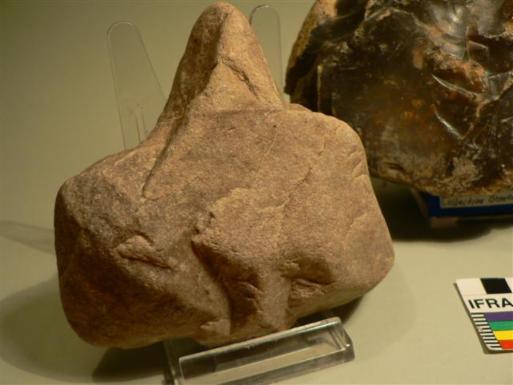
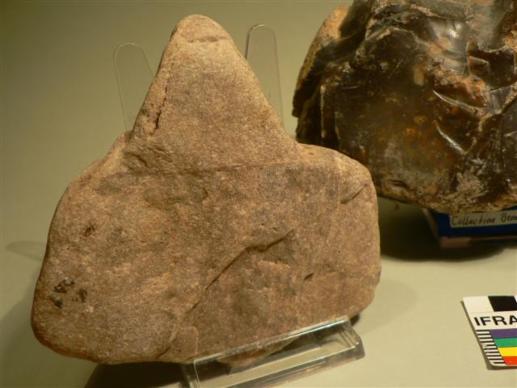
Gezeigt wird mit den vorangestellten 2 Fotos die Vorder-und Rückseitenansicht des quarzitischen Fundes. Er trägt Eingriffsspuren auf den Seiten aber auch auf den Randbereichen, auf die nicht näher eingegangen werden soll. In jedem Fall hat dieses Stück Einzelelemente, welche sich auch auf dem größeren Flintstein wiederfinden lassen. Hier soll jedoch nur die generelle Umriss- Form eine Standardisierung belegen mit variablen Größen, welche damit "Schriftcharacter" erahnen lassen über eine große Entfernung hinweg? Vielleicht sollen auch damit "Landmarkierungen" in Steinform gemeint sein? Eine ausgeweitete Forschung könnte dazu Aufschluss geben.
2 preceding photos reflect on the back and front side of the quartzitic find indicating similarities on the overall shapes. Here are working traces found on both sides but also on the rim part. The general attention refers to a standardisation of motif in variable size. Perhaps a former landmark in stone. Global research might bring answers. The very rolled LANZAROTE beach-sand find is too weak for more information.
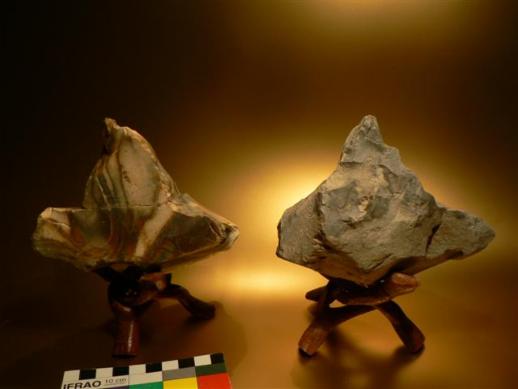
Nicht ganz unähnlich zu den bereits gezeigten Objekten verhält sich diese Formgebung, die als "fliegende Vögel" interpretiert worden sind. Beide sind aus Flintstein, wobei das linke Objekt auf diesem Foto eine nach oben schauende Vogeltype mit Schnabel und gestreiftem Gefider darstellen kann. Weitere Elemente für eine Vogeltypeninterpretation findet sich als Schattenbild auf dem grauen Flint. Vergl. nächstes Foto.
Very similar in shape are the "flying bird" types. Both items are created in flint and carry indications of birds. The item to the left shows a sitting bird looking skywards and the one to the right shows a "shadow picture" of a bird with a spreaded wings.
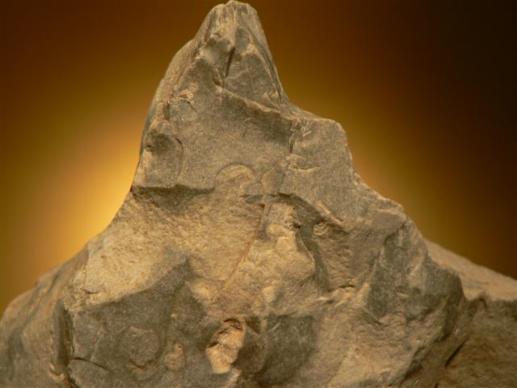
WEITERE ELEMENTARE IMPRESSIONEN
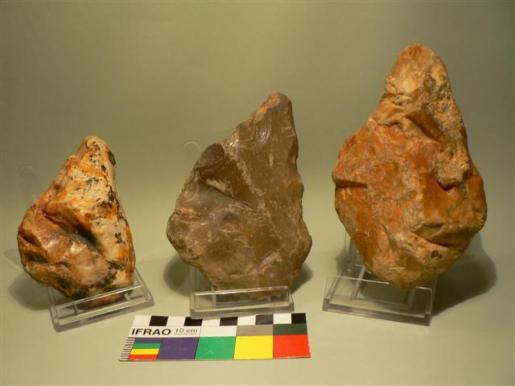
Rechts aussen: Auf diesem Symbolstein erscheint eine herausgestellte "Nase", welche einen Gesichtsausdruck dieses Steines untermalt. Ein weiteres Fundstück akzentuiert diese "Nase" , die auch noch bei anderen, aufgegriffenen Objekten, auffällig war. Das Feuersteinstück ist mit der unterschiedlichen Materialauswahl wie Granit (Foto unten) , nunmehr abgesichert und zeigt auf, dass wir noch heute eine Beweisführung der eigenen Art entwickeln können.
Object to the right under discussion.The "facial impression" is accentuated on a flint implement and is very similar to another granit stone, see photo below. The former sculptorer leaving his evidence of proof.
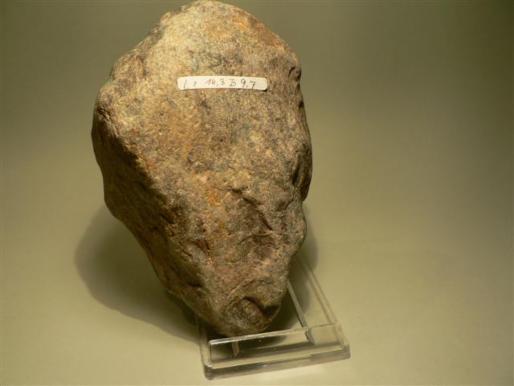
Weitere Merkmale.......more repeated markings
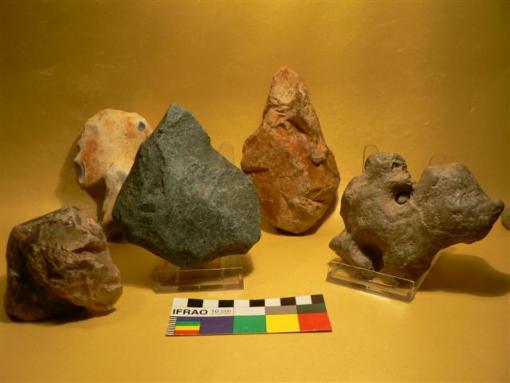
Stein im Zentrum zeigt im unteren Bereich diese kleine Gesichtsmaske, nächstes Foto deren vertiefte Augen-und Mundbereich, zusammen mit einer kleinen Nasenandeutung eventuell ein Kind, aber generell eine eindeutige Gesichtsmaske vorstellt. Diese Maske taucht auch als Einzeldarstellung innerhalb des gesammelten Inventares auf und ist hier - interessanter Weise- auf einem traditionell als "Werkzeug" eingestuften Gerätes angebracht. .
The "centre stone" usually seen as tool, offers also "facial aspects" which resemble human masks, the tiny nose gives the impression of a child? Such "mask" can be found on different materials like flint and calcit.
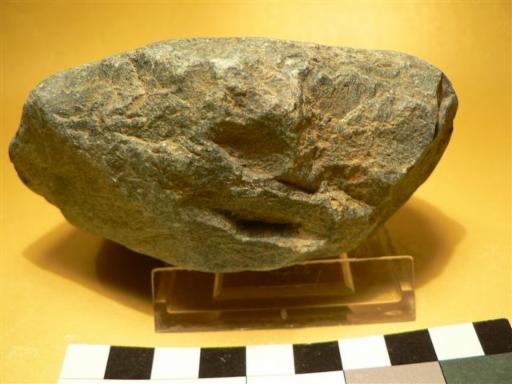
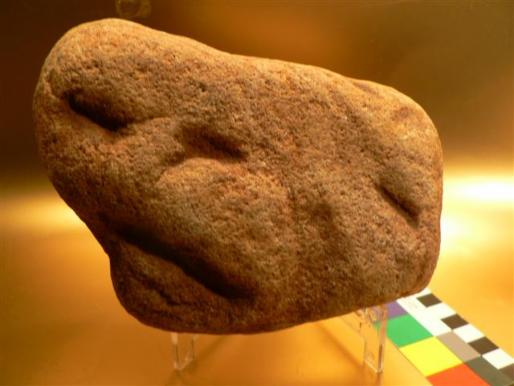
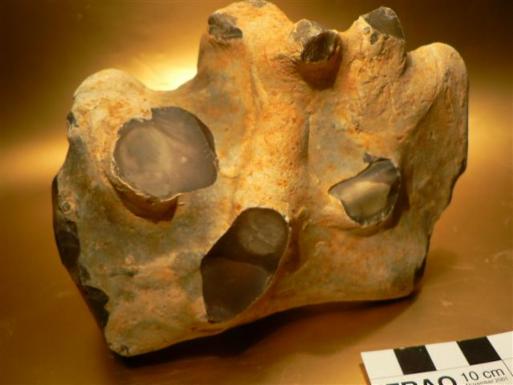
Eine Feuersteinmaske, mit natürlicher Formung einer Nase und aufgerissenem Mund. Eine weitere Maske zum Vergleich, ebenfalls aus Feuerstein wurde zur Totenmaske. Vgl. die folgenden Impressionen.
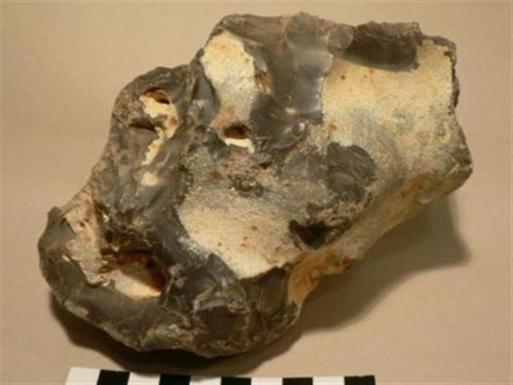
Vorderseitenansicht mit alter Kortex und Bearbeitungsspuren/Frontview showing old traces of remaining cortex shaped into a mask, accentuating mouth and nose part.
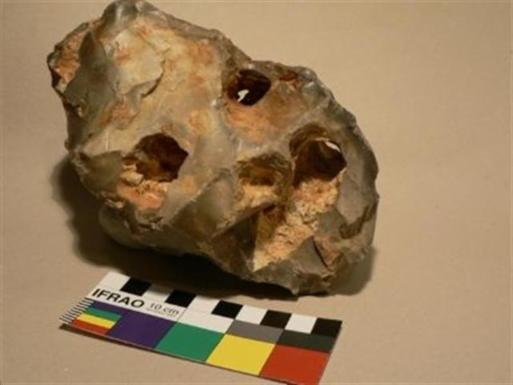
Rückseitenansicht. Hier sind natürliche Löcher des Steines als Totenmaske umgearbeitet. / Backside impression of the same stone using the natural holes to accenuate a death type of mask.
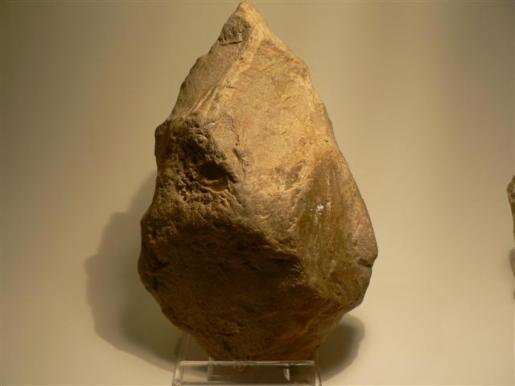
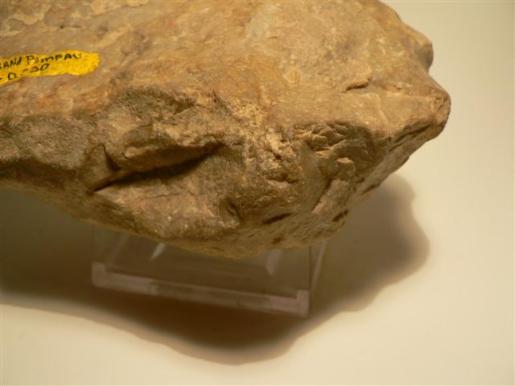
Eine "Handaxtform" hat Merkmale, wie das Objekt vom 1. Foto, oben mittig. Auf seiner Unterseite steht eine kleine Masken- Icone, eine Nasenandeutung separiert zwei Augen, wovon das rechte Auge durch einen kleinen Arm mit Hand "poliert wird", damit man besser sehen kann?
This "handax" shape carries also a small "mask" similar to the one shown on the basalt implement. The right eye here on this object is rather round shaped. In microlithic picture fashion a little arm and hand seem to "polish" or blind the eye, for better eye-sight?
NOCH MEHR MASKEN:::::::: more such "masks"
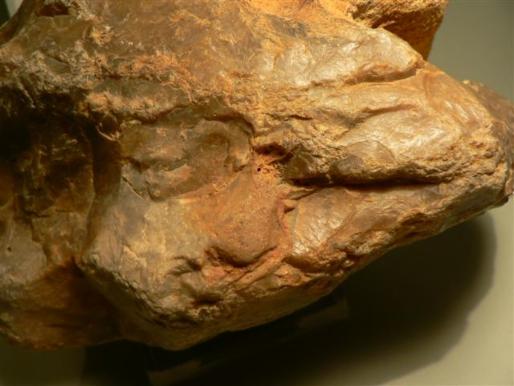
Diese Maske scheint nur Einäugig zu sein, das Oberlid hängt über dem Auge. Diese Maske trägt zwei Tierköpfe, wie auf den nächsten beiden Fotos gezeigt wird.
The lid of the right eye is hanging and therefore it seems only a one eyed mask.Above this mask two animal heads are situated and will be presented on the following photos.
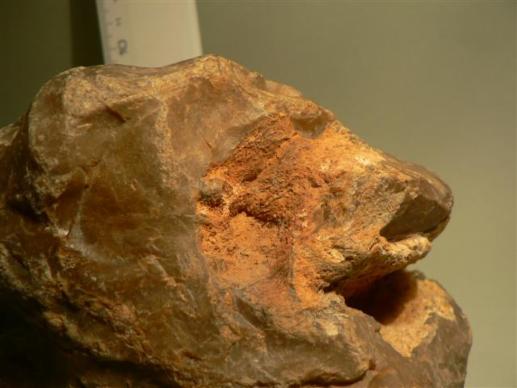
Dieser Tierkopf erweckt den Eindruck eines Bärenkopfes und das linksseitige Tier erinnert an einen Löwen. Es könnten auch zwei andere Raubtiere gemeint sein, der Betrachter wird sein eigenes Urteil dazu fällen
Both impressions, top and below photo remind of animals like bear or lion.The viewer will arrive at an own verdict.
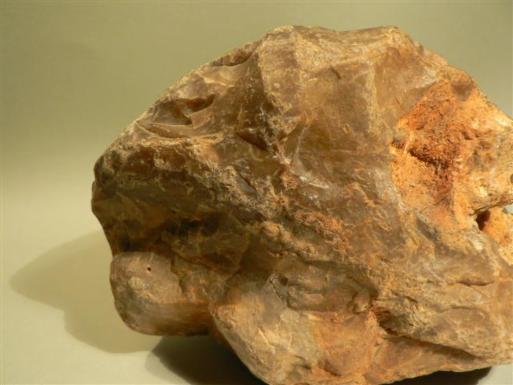
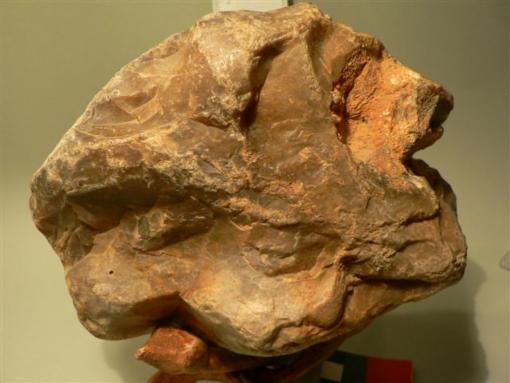
Der Gesamthabitus des Stückes erscheint sehr "ramponiert" oder gebraucht worden zu sein, es gibt eine Gesichtsimpression, unten angedeutet? Abmess. 15,5 cm lang
For the overall impression of this object can be said, it looks rather worn and old.A facial impression carries animals, like head of bear, lion and elephant, see head of elephant below left.
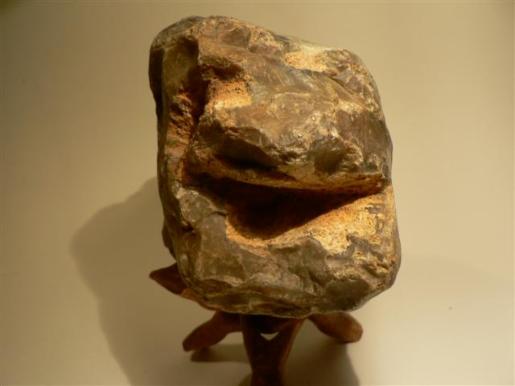
Den gleichen Stein oben vorangestellt, nun mit der "Maulkerbe" nach vorne gedreht, erscheint eine "lachende Maske" mit einem Elefantenkopf und Auge.
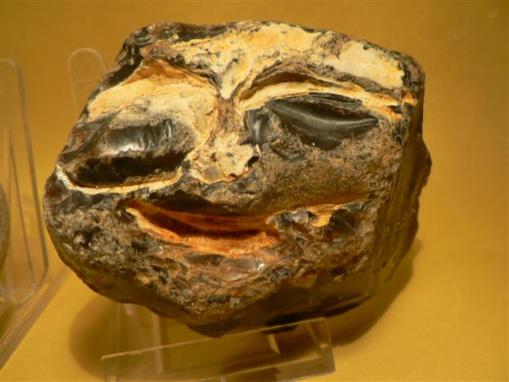
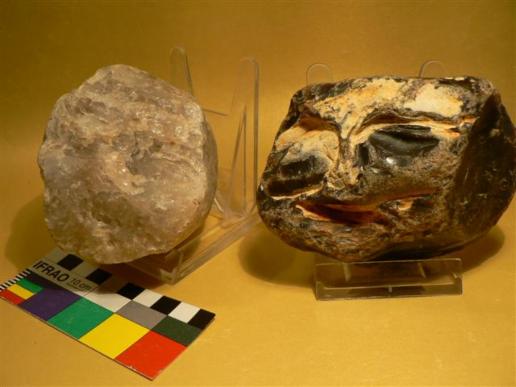
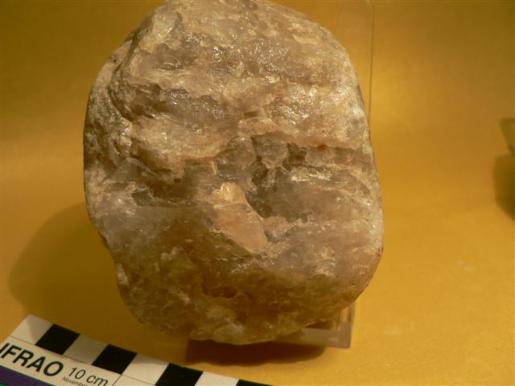
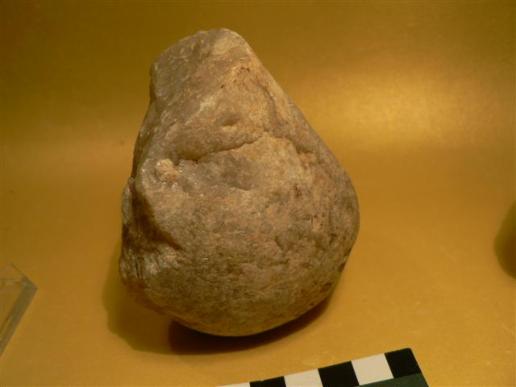
Calcitstein macht einen runden, aufgespaltenen Eindruck und kann als sogenanntes "pebble tool" gedeutet werden. Von dieser Seite aus betrachtet erscheint ein Elefantenrüssel mit darunter liegendem Auge. Von dieser Betrachtung abgesehen, erscheint es für die MASKEN-ICONEN hiermit einen KOPIERUNGSBELEG zu geben, denn die vorgestellte Feuersteinmaske ist identisch in allen Detrails wiederholt. Damit ist hier ein Potential für die Anerkennung der Figurensteine erbracht, der auch den Begriff der PAREIDOLIA widerlegt, welcher immer häufig als Ablehnungsgrund hervorgebracht wird. Beide Objekte stammen von einem Fundplatz Gr.-Pampau.
Calcit pebble tool gives the impression of a splitted spheriod carrying a facial mask, identical to the introduced flint mask.Copying of Theme.
The side impression is that of an Elephant-trunk, with an eye marking. Both, the flint and the calcit mask contradict the pareidolia aspect, often used to reject sculptures.It is here an ages old ICON. Both objects are sampled from one and the same site Gr.- Pampau.
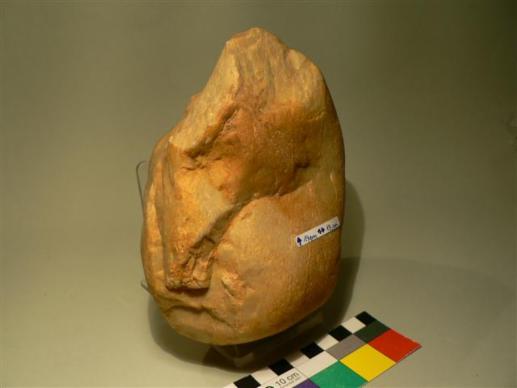
Vergleiche den "Chopper-Effekt", erreicht durch zwei gegensätzlich geführte Abschläge. Deutliche gewollte Gesichtsmerkmale auch an diesem Fundstück. Abmessung 14 cm L, 13 cm Br. Material: -Quarzit-
Compare another so called "chopper", created by 2 detachments at the top of the implement, carrying "facial" expressions. Technicals details above.
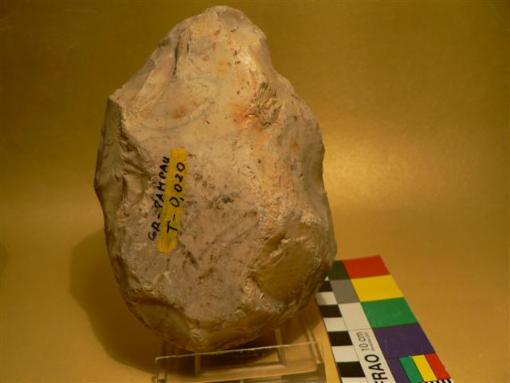
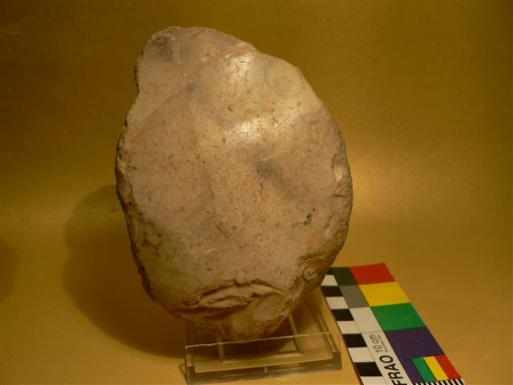
Eine rundum bearbeitete Form in Clactonien -Abschlagtechnik zeigt viel Ähnlichkeit zu einem traditionellen Werkzeug, welches durch den Kenner Arsen Faradh. hier mit seiner numerischen Aufschrift versehen und somit anerkannt worden ist. Neben der "Werkzeugzuordnung", welches nicht durch Gebrauchspurenanalysen belegt wurde. Offen bleiben nun aber die Gestaltungsmerkmale durch die Figürlichkeit wie das " Maskengesicht."
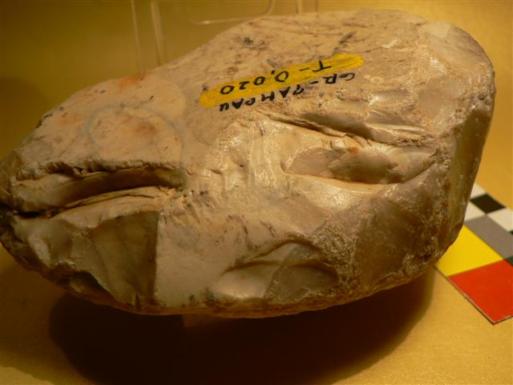
Engl.: Cultural is this above implement fashioned in Clactonian habitus and can be identified WITHIN other known "tool-kits". We still have no use-wear analysis, but a figurativ aspect- the MASK-ICON was recognised at the side of the implement.
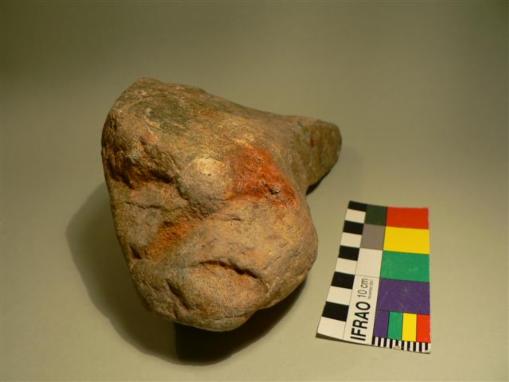
Als Frontalmaske erscheint dieses "Gesicht" auf einer "Vogel- Glyphe" (kein Werkzeug zum Hammern, Graben, Schlagen usw.), aber mit Farbauffüllung an der Stelle des anderen Auges. Mittig ist ein weißer Kreis, der vielleicht ein Mond-Symbol darstellen soll.
Impression of a frontal mask similar to the already introduced one eye "masks" with red ochre signaling the other eye. In the centre a white circle (moon symbol?)
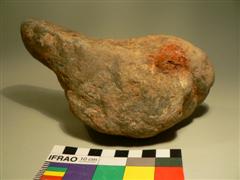
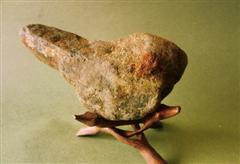
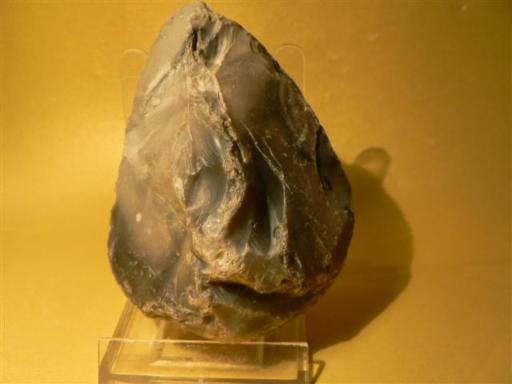
Nicht mehr zu übersehen ist auch für den unbedarften Betrachter diese halbseitige Gesichtsikone, ob es sich nun um ein Werkzeug der pal. Forschung handelt, ist nicht erwiesen bzw. untersucht.
Size: 9,5 cm long is this implement in flint. A facial half size impression cannot be overlooked but the "tool" type of the pal. tool kit, is not investigated either.
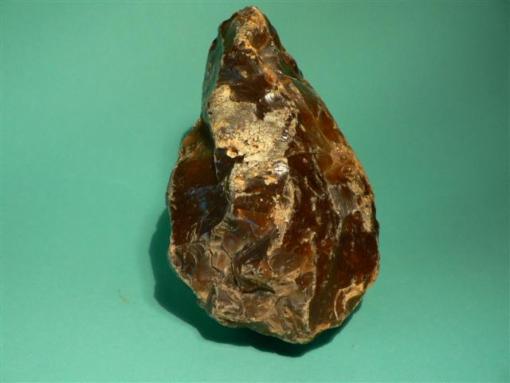
Wiederholung von Form inklusive schräger Nase, einem Auge sowie Mundkerbe.
Repeated overall shape, one eye, nose and mouth.
Gr.-Pampau site sampling:
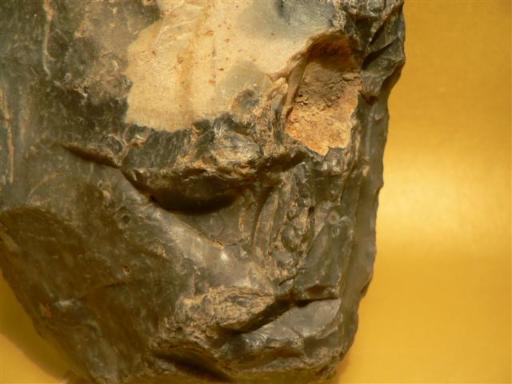
Auch dieses "MASKENGESICHT" hat 2 Augenmulden, davon ist das linke Auge als halb geschlossen zu interpretieren und das mit einer alten Kruste belegte Auge rechts
gilt als geöffnet. Klare Ansage für eine Mundgestaltung ist gut erkennbar. Etwas Abstand beim Betrachten ist von Vorteil. Unteres Foto hat eine Gesamtansicht.
Facial "mask" with eyes in "closed" and "opened" fashion has a clear mouth carving too. The eye to the left seems as half closed. Best be viewed from a little distance.Below is an overview of the item.
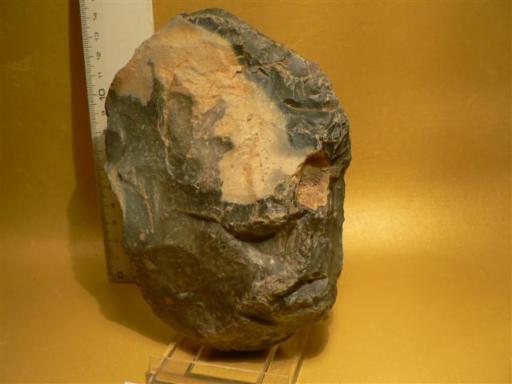
Größe: 15 cm ein grauer Feuerstein, der ebenfalls einen guten "Werkzeugkandidaten" hergibt. Ein Fund aus dem Jahre Aug. 1986, ist als Werkzeug vom Experten Arsen Faradj. eingestuft. Auf die figürlichen Aspekte ist bei der Beschriftung nicht eingegangen worden. Diese Masken, auf den unterschiedlichsten Materialien entdeckt, waren Merkmale, die mit bloßem Auge zu erkennen sind und wegen ihres Wiederholungscharakters keine "momentanen Impressionen" sind. Solcherlei Abschläge an Ort und Stelle unbeachtet zu belassen, weil eine Werkzeug-Einstufung nicht nachweisbar war, wäre als Untersuchungsmethode für mich nicht akzeptabel gewesen.
Size: 15 cm grey flint suggesting a tool-type too. Sampled Aug. 1986 was it soon recognised by the Moscow-Expert, Dr. Arsen Faradj. when numbering the inventory here. We "missed" here the chance to talk about the art aspects on the implement. All MASKS can be noticed with "bare" eyes and are general MARKINGS.
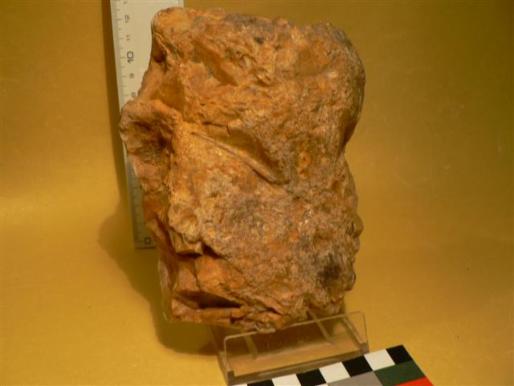
Eine "einäugige Maske" auf einem Flintstein mit einem Seeigelstachel , macht ein Auge dieser Maske "blind". Das Stück wiederholt die Eindrücke, die man auch immer wieder auf anderen Fundstücken - wie oben gezeigt - wiederfinden kann. Es sind deutlich standardisierte Merkmale auf diesem Fundplatz mit IKONen- Charakter. Oft findet man in den geöffneten Mulden noch alte anhaftendes Sandmaterial, welches man zur Untersuchung oder Datierung heranziehen könnte.?
The one eye-mask, shows on this flint a sea-urchin-spine, giving this object the "blind appearance" of one eye but the intact eye carries some grain or sand, perhaps useful for investigation.?
WIEDERHOLUNG VON "AUGEN-MERKMALEN"
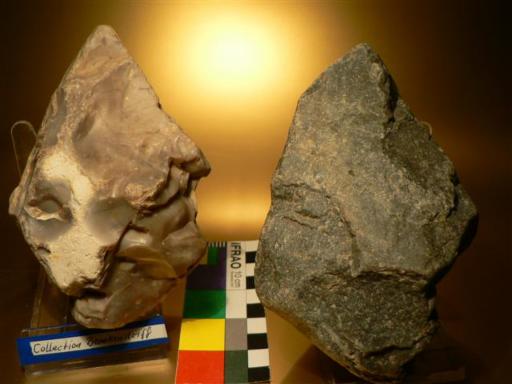
Aus Flintstein und Basalt sind diese beiden Rautenformen von ca. 13 bis 13,5 cm Größe. Hierbei handelt es sich wieder um eine deutliche Themen- bzw. Motivwiederholung. (Kopierungsbelege). Linksseitig sind neben anderen figürlichen Elementen 2 Augendarstellungen angebracht worden, die nun wirklich keine Zufallserscheinung sind. Mehr noch, ist das "Auge" des linken Steines mit einer weißen Rinde belassen worden und auch dieses Detail wurde auf der anderen Gesteinsart wiederholt.
Two more rhombic shaped objects indicating "wanted copying" of themes. The form resembles also" human portraits " but of interest is at this stage the two "eye shapes" placed frontal left side. They are clearly artificial. Compare now the white cortex below the eye also shown as well on the Basalt-stone indicated there by an extra rim.
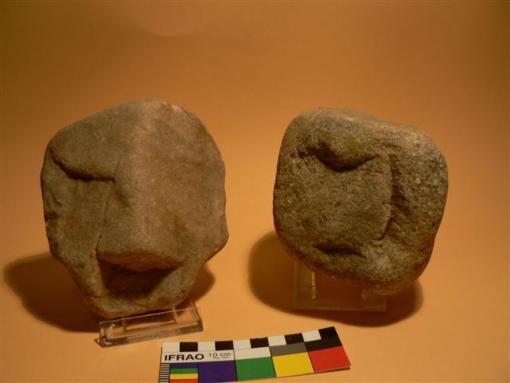
Masken mit geschlossenen Augen, Nasenandeutung und Mundkerbe. Es sind keine eingebildeten Impressionen, im Gegenteil, diese Augenlidstellung ist mehrfach im Inventar vorhanden.
Impression of "masks" with closed eye lid, marking of nose and mouth found repeated on various implements.
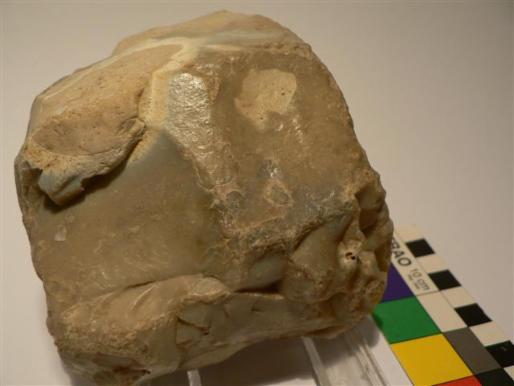 / MORE EXAMPLES OF REPEATET DETAIL OCCURENCES OF MASK-like IMPRESSION with extra microlithic impressions here not extra exposed. The natural hanging "eye lid" noticed on the black mask found his counter part in this grey flint object. Below is a similar shaped square mask, showing old cortex left, to repeat the wanted "idea".
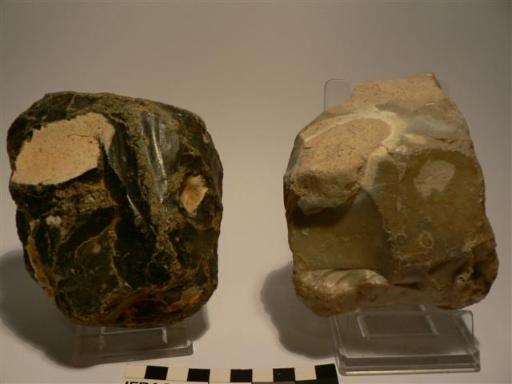
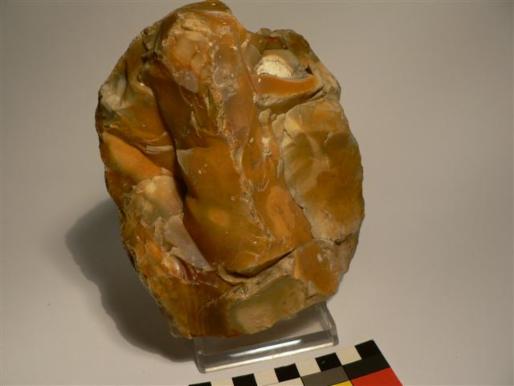
Ein Mondaufgang soll auf diesem Maskenstein angezeigt werden?
Moon rising is demonstrated here on this mask?
Feuersteinstück mit Ocker-Gelb / object with traces of yellow ochre.
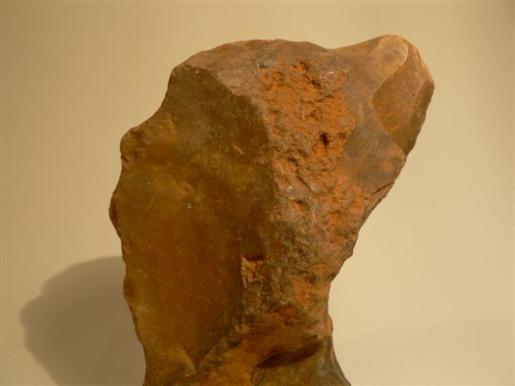
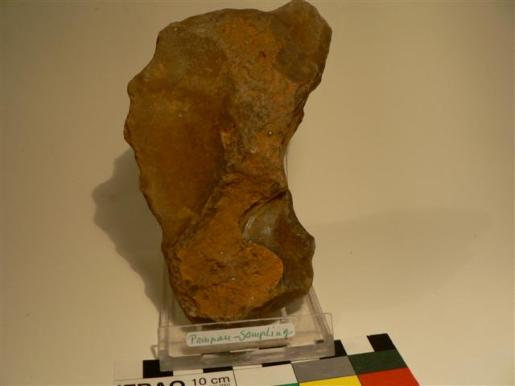
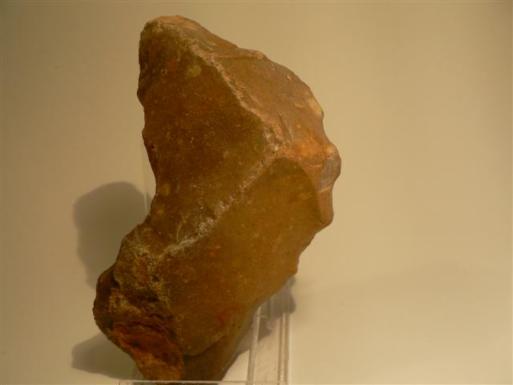
Bei Drehung das gelblichen Feuerstein- Objektes wird eine "Sichelform" des Steines deutlich, die ihre Wiederholung auch auf einem roten Feuerstein hat, wie die nächsten Aufnahmen zeigen.
When turning this "yellow Flint-object" a sickel shape becomes apparent, such shape finds a counter object in red flint, when we study the following 7 photo impressions.
Bei der folgenden Skulptur werden 7 Fotos von ein und demselben Objekt gezeigt.
The following 7 photo impressions are taken from one sculpture.
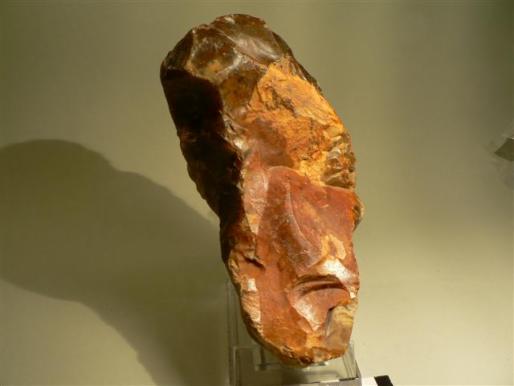
Diese Feuerstein-Skulptur ist so überlagert von einzelnen Impressionen, wollte man alle herausstellen, braucht es eine ganze Kapitelseite. Hier ist nochmals in der Wiederholung nun die bereits bekannte "Einäugigkeit" gezeigt.. Das "erhabene Auge" auf der rechten Seitenkante ist in sich selbst eine kleine Skulptur, wie das nächste Bild herausstellt. Maße:18,5 cm lang, Breite ca. 8,5 cm. Das Stück hat die Form einer Sichelrundung.
A flint sculpture in shape of a sickle carries countles impression flowing into each other, creating new impression all over, and actually needs a special chapter here to present all. The introduced "one eye mask" impression is repeated but the "EYE" at the right side represents a sculpture within, see next photo. Measurements: L 18,5cm and width 8,5 cm.
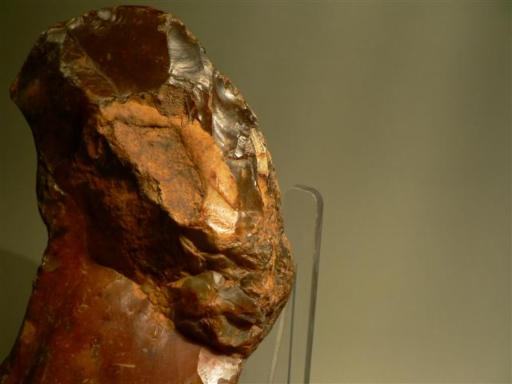
Gedreht, erscheint ein extra dunkler Fleck auf der Umrisslinie als Auge eines Pferdekopfes.
Turning the object, the silhouette of a horse head appears, indicated with a dark marking, representing perhaps the "eye" of this animal?
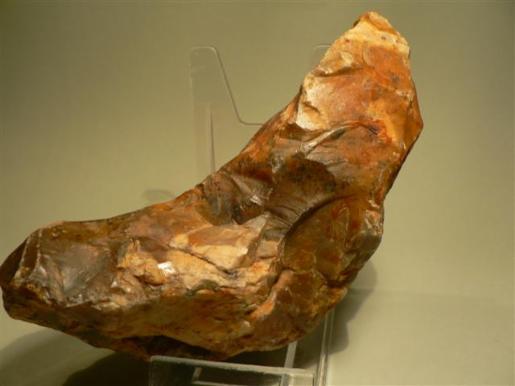
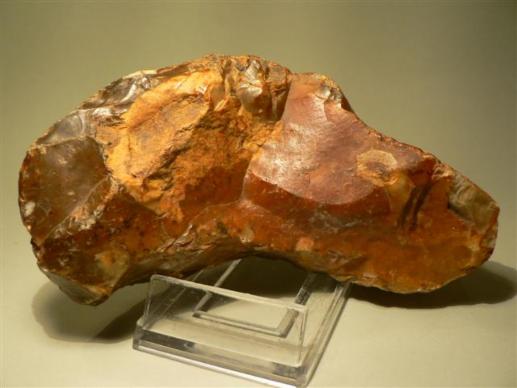
Hier wird die "Sichelform" deutlich, wobei an beiden Enden eine Kopfform erkannt ist, die nun von dieser Seite einer "liegenden Person" gleicht.
This photo is showing the sickle shape and has on both ends "facial impressions", see next photo. Impression is that of a resting person.
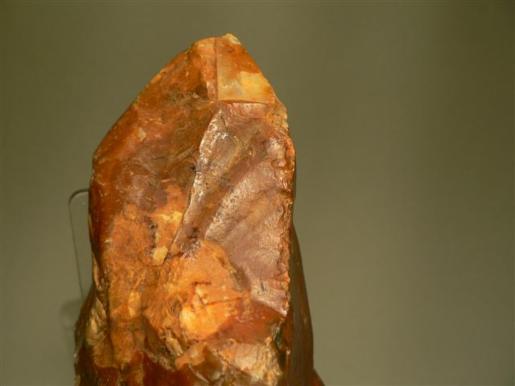
Auf der anderen Spitze der Sichel erscheint ein weiteres Gesicht, welches durch eine sehr feine Retuschierung akzentuiert ist.
Facial part on the right side, is very much accentuated by a small retuche.
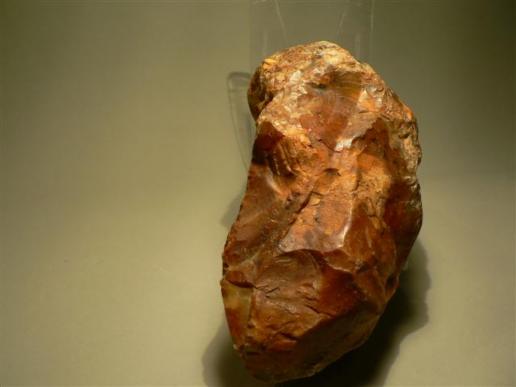
Ein weiterer Tierkopf erscheint, hier ein Löwenkopf oberhalb der linken Kante.
A lions head appears at the upper left side
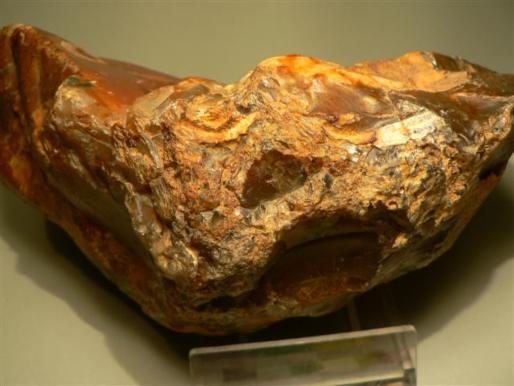
Eine alte belassene Kortex hat "Augenränder " für eine kleine "Maske" genutzt, um Nasen- und Mundkerben zu schlagen.
Old remaining cortex is used here to create "round eye impression", compare to the large boulder size facial stone on chapter 1 of stone age art.
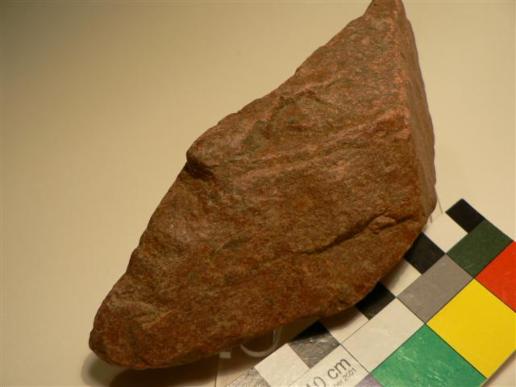
Die Mondsichelformen tauchen im Inventar in unterschiedlichen Gesteinsformen auf, dieses Objekt ist ausgewählt, weil es die gleiche Nasenimpression zeigt, wie die auf den ersten Fotos dieses Kapitels.
The "moon-sickle shape" is fashioned on several different stone types sampled at the site, the material selected here has resemblance to the nose style, shown on the very first photos of this chapter.
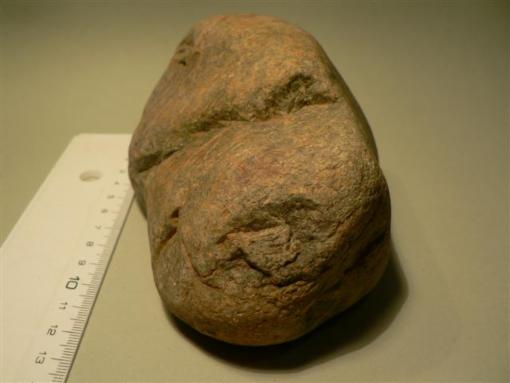
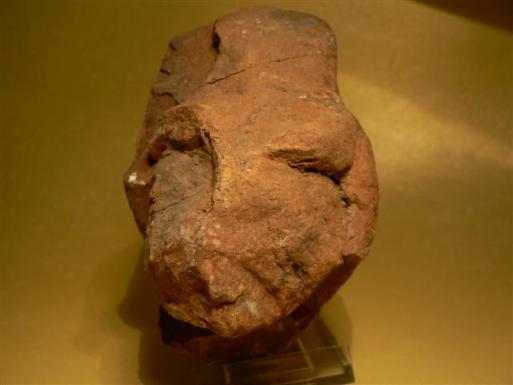
Der Eindruck einer Zunge wird am Sedimentstein vermittelt, aber blieb Spekulation, bis dieses Fundstück aus "Sandstein" Absicherung für eine Interpretation erbrachte. Es ist mit mehrfachen Bildeindrücken ausgestattet, ganz wie der Rest des Fundmaterials.
A larger sediment core with several details, including facial impressions. A tongue similar to the object in sediment was securing the interpretation.
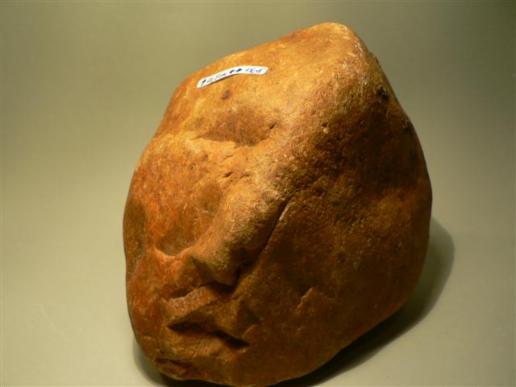
L.: 14,5 cm Höhe:/ hight 12,5 cm. Material Quarzit with a stylized ape-Icon at the back.
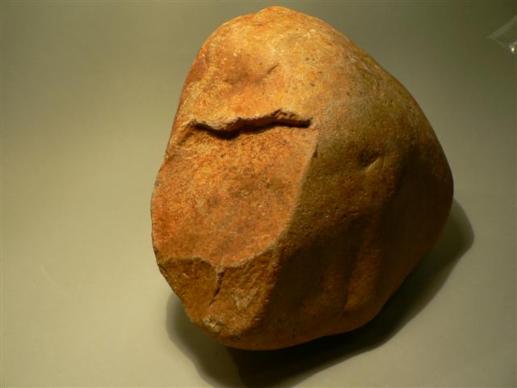
Bis auf das Elementarste reduzierte Bildsprache eines "Affengesichtes". / Elementar style of an ape- head shape representation.
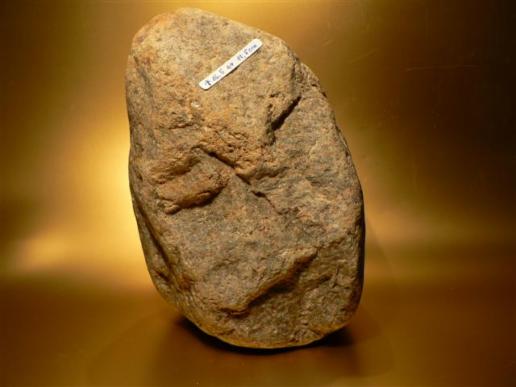
Ein IKONEN-Stein, mit Nasenandeutung und einer stilisierten Affenkopf-Themendarstellung. Vgl. dazu die folgenden Impressionen und die 2 angedeuteten Augendarstellungen links auf der IKONE, welche auch , im Gegensatz zu anderen Fundstücken, eine Standfläche ausweist und damit selbständig stehen kann. Der "Nasenbereich" ist gleichzeitig eine schwache Andeutung eines menschlichen Profilgesichtes. Das Material ist granitisch und gibt eine Absicherung zu den Flintsteinobjekten mit ähnlichen maskenartigen Impressionen.
This ICON has a plattform to stand on its own. Repeated is the stylized impression of an ape-head with two small round eyes on the left side, a long nose with a weak impression of a human face and a large detachment to indicate the mouth to complete this mask-like appearance here only in rock to underline smae Impressions on flint - stone objects.
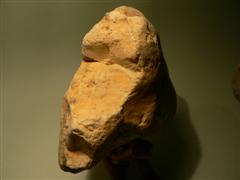
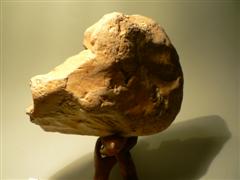
More ape-head impressions/WEITERE IMPRESSIONEN VON AFFENKÖPFEN IN FLINT
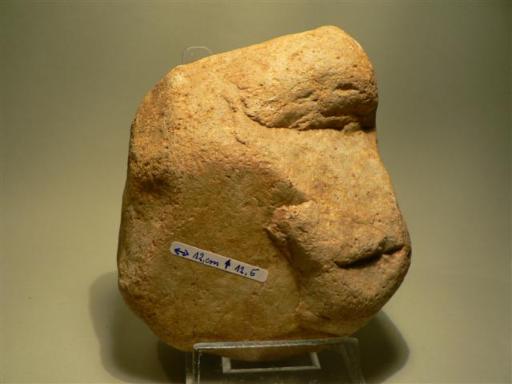
Sedimentstein mit gleicher "Kürzelschrift" und sehr ähnlich in der Mundgestaltung.
Similar to "short hand writing" is the ape-face manifested also on quartzitic sediment, here the mouth shape is repeated similar to the above yellow sediment implement.
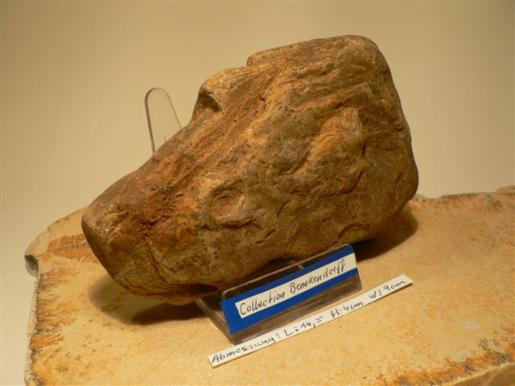
Silhouette eines Paviankopfes/ baboon-shape of a head
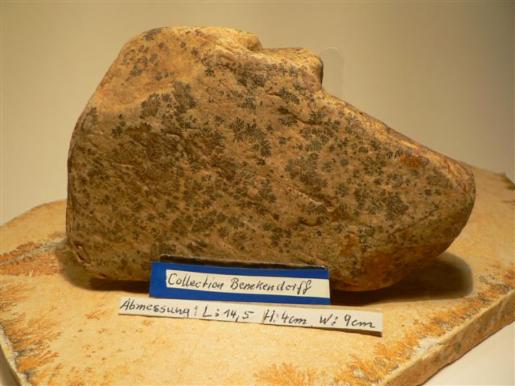
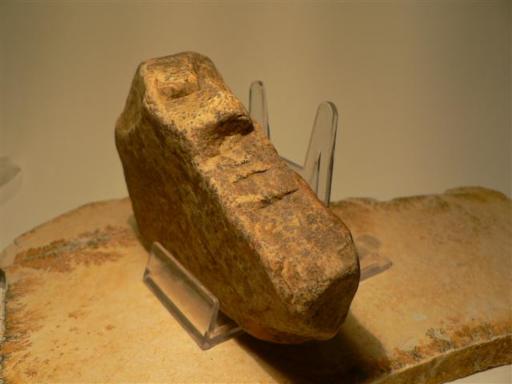

Pflanzenartige Merkmale (Dendriten) verteilt über diese flache Skulptur, die an den "Hundskopfaffen" oder an den rezenten Südafrika Pavian erinnert. Diese "Scheinfossilien" sind selbst noch an den Eingriffsmerkmalen des oberen Randbereiches zu erkennen und geben vielleicht dem Fachmann Hinweise auf das mögliche Alter dieses Fundstückes aus Gr.-Pampau.
Pseudo fossilisation markings all over this flat sculpture, reminding in its shape of the "dog type ape head" or the recent South Africa baboon head. The marking is found on all sides, even there, where former shaping took place. Perhaps this could lead towards a dating of such ancient implement by experts?
Identische Größen bei den "Faustkeilen" oder anderen Werkzeugformen
Identical sizes in Handaxe form or other tool resemblances regardless of material choice.
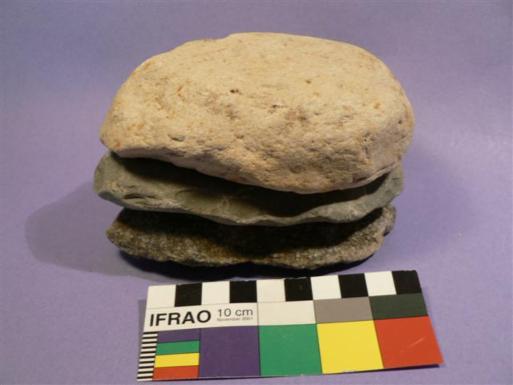
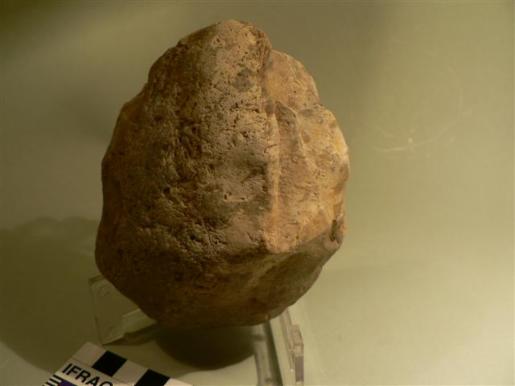
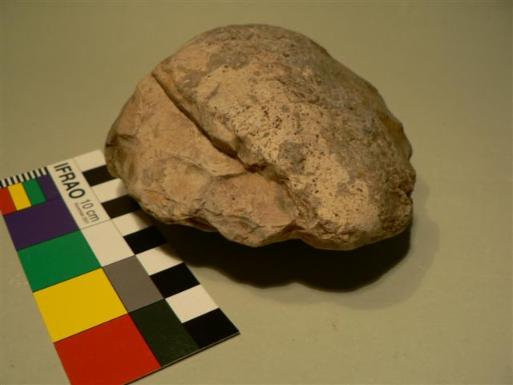
Neben den gleichgroßen Formen hier noch ein alter Keil aus Flint, damit die Materialvielfalt vorgestellt ist. Das Stück hat die gleiche Form aber nicht die gleichen Abmessungen wie oben gezeigt. Es macht einen verrundeten Eindruck.
Next to the size identicals of handaxes, now a single old flint type added to complete the material mix. The object has very worn appearence.
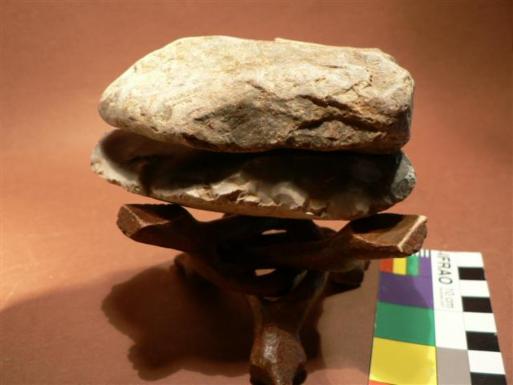
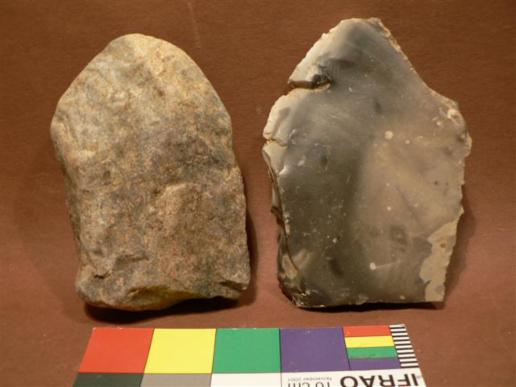
Feuerstein und quarzitisches Material. Rechts hat eine "Gorilla-Gesichts-Andeutung. Ob es Werkzeuge sind ist unklar, jedoch würde das Flintobjekt wohl kaum seine aussagefähigen Gesichtsmerkmale behalten haben.
Flint and quartzite objects in identical size, the flint one carries a facial appearance, reminding of a Gorilla. If both are to be seen as tools remains open but the flint shaped item would have lost its identifiable facial parts?

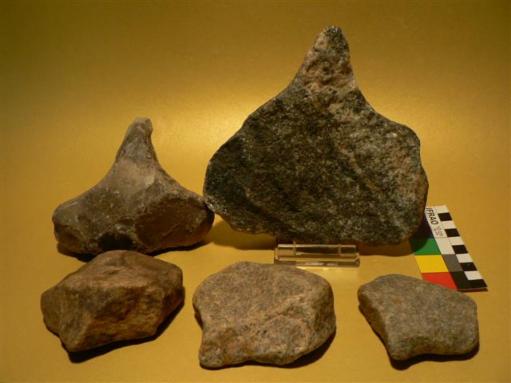
Groß-Pampau Funde in Wiederholung aus Flint, Granit, Quarzit und Sandstein. Bei der Suche nach vergleichbaren Funden sind die Geräte aus KVARNBY; SUED -SCHWEDEN aus einem Abfallschacht von Interesse.
Repeated shape occurance in mixed material choice -flint, granit rock, quartzite and sediment stone. On the photo below are 3 objects in front, resembling the Gr.-Pampau shapes SEE BELOW an Ensemble from KVARNBY, Southern part of Sweden.
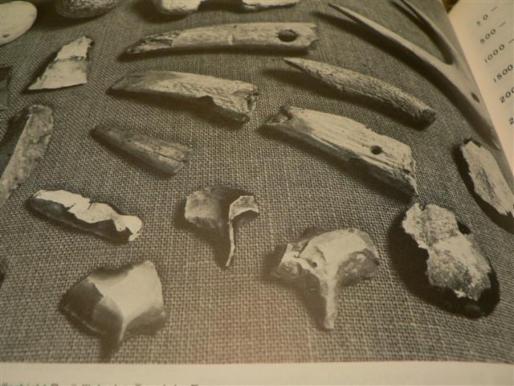
Über Fundumstände dieser Art sind auf der folgenden Seite IMPRESSIONEN B unter "WERKZEUGTYPEN DER STEINZEIT" Informationen zu diesem Ensemble von Geräten aus einer Abfallschicht Süd-Schwedens nachzulesen. kOPIE mit freundl. Genehmigung DBM 1980
More information about the find situation of this ensemblage can be found on the next page IMPRESSIONEN B." Tool-types of the stone age" from a waste pile of an area from southern Sweden.
Aug. 2012. go to next page........